Explore expert insightscase studies
from Liverton Security.
Explore expert insightscase studies
from Liverton Security.
Learn about cyber risk, penetration testing, governance, AI security and emerging threats through practical, real-world perspectives.
Featured Insight
Our featured article explores a current cybersecurity challenge and practical strategies for reducing organisational risk.

The Human Firewall: Why Your Team is Your Best Defence Against Cyber Attacks (Part 1)
Insights & Case Studies
Explore practical cybersecurity insights from our consultants, covering governance, penetration testing, human risk, AI, compliance and emerging threats.

Project Glasswing: What It Means for Cybersecurity
Project Glasswing goes beyond its high-profile launch partners, with funding for open-source security, AI access for maintainers and new governance measures. But the initiative also raises questions about access, workload and who is responsible for fixing the vulnerabilities AI finds.

Claude Mythos: What Its Low Cost Means for Cybersecurity
Claude Mythos has been portrayed as requiring nation-state-level resources to replicate. The reality is more concerning: AI-assisted vulnerability discovery can cost as little as $50, potentially putting powerful offensive capabilities within reach of a much broader range of actors.

Why Secure Large File Transfer Remains a Challenge for Modern Organisations (Webinar)
Secure file transfer is a growing challenge for organisations as email limits and unmanaged sharing tools introduce security, compliance and governance risks. Explore how organisations can maintain control, visibility and security when sharing large or sensitive files.

Pen Testing: Trust Me Bro(ker)
A penetration test uncovered a hidden internal message broker that exposed unauthorised access due to insecure default configurations. This article explores how assumptions about “trusted internal systems” can create significant security risk.

The Governance Gap: Speed vs. Structure
In fast-moving environments, security and governance often struggle to keep pace with development speed. This article explores how structural gaps emerge in agile organisations and how they can be addressed before they become security risks.
Beyond the Firewall: Why Real Pen Testing Must Cover the Whole Business
Why modern cybersecurity requires a broader approach beyond traditional perimeter defences.
Latest News
Stay up to date with Liverton Security news, product announcements, partnerships and company updates.
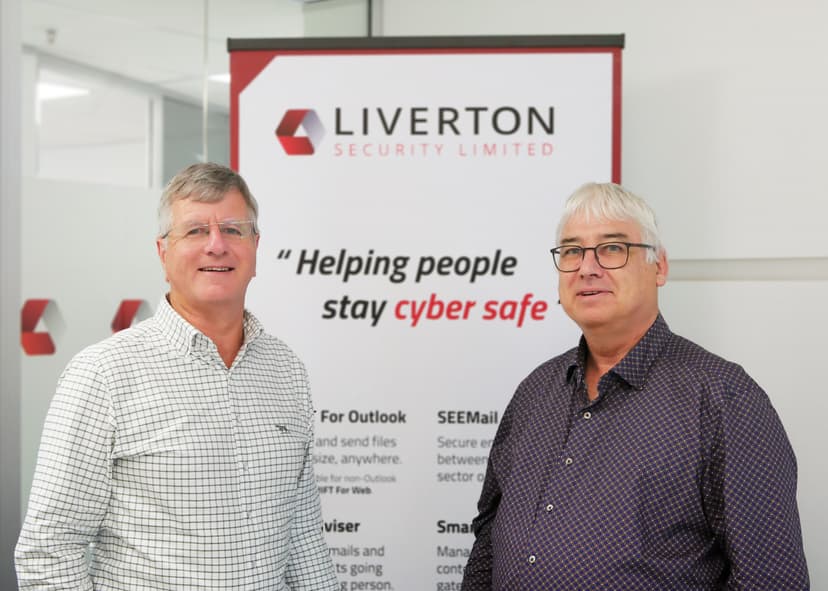
Liverton Security Launches SGE Plus on the NZ Government (NZGovt) Marketplace
Liverton Security has launched SGE Plus on the NZGovt Marketplace, providing New Zealand government agencies and regulated organisations with a practical framework to strengthen email security, improve compliance, and reduce cyber threats through advanced authentication, governance, and real-time monitoring.

Liverton Security Implements Advanced Email Security Solution at Gill Jennings & Every LLP
Liverton Security, a leading provider of email security, announces the successful implementation of a new email filtering and threat management solution at Gill Jennings & Every LLP, one of Europe’s leading intellectual property firms.
Need guidance beyond our resources?
Every organisation has unique security challenges. Speak with our cybersecurity specialists for advice tailored to your environment and objectives.
Speak with a Consultant